We play a lot of HeroQuest here in Chez Tanglewood; you’ll have seen that from all of my posts about it. It’s really fun because we’re never quite sure what’s going to happen. Kasul plays the unseen evil sorcerer that is controlling the scenario and all the monsters. The rest of us play different characters – barbarian, dwarf, rogue and elf. And because we’re all different people, we’re not always working together. This leads to some hilarious situations. My character died once, and I had to start over with a new clone. In our last game, the rogue died and we had to use a one-time-only artifact to bring him back so he wouldn’t have to start over.
One might say that one of HeroQuest’s strengths is forcing people to work together.
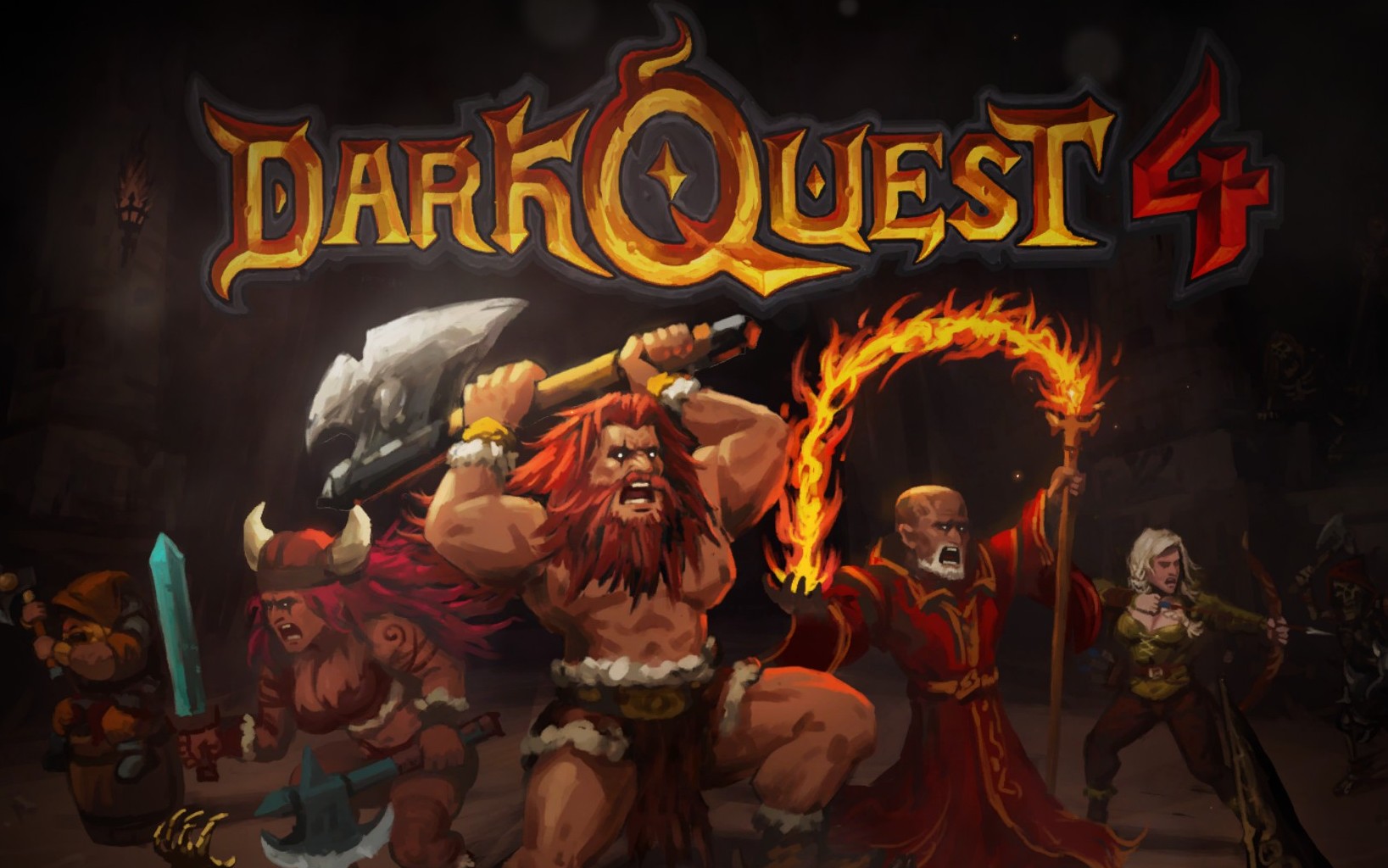
Dark Quest 4, the latest entry in a series explicitly designed to bring HeroQuest onto consoles and Steam, understands that in most cases, it’s just going to be one player vs the computer. It simplifies things somewhat; you bring three heroes on an adventure, not four, and the adventures seem to be somewhat shorter than in the tabletop game.
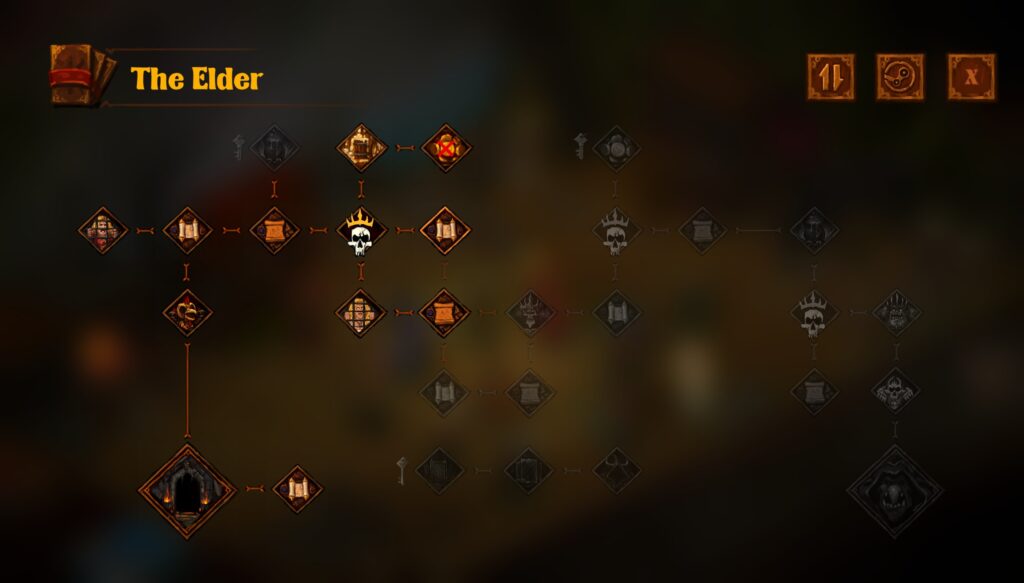
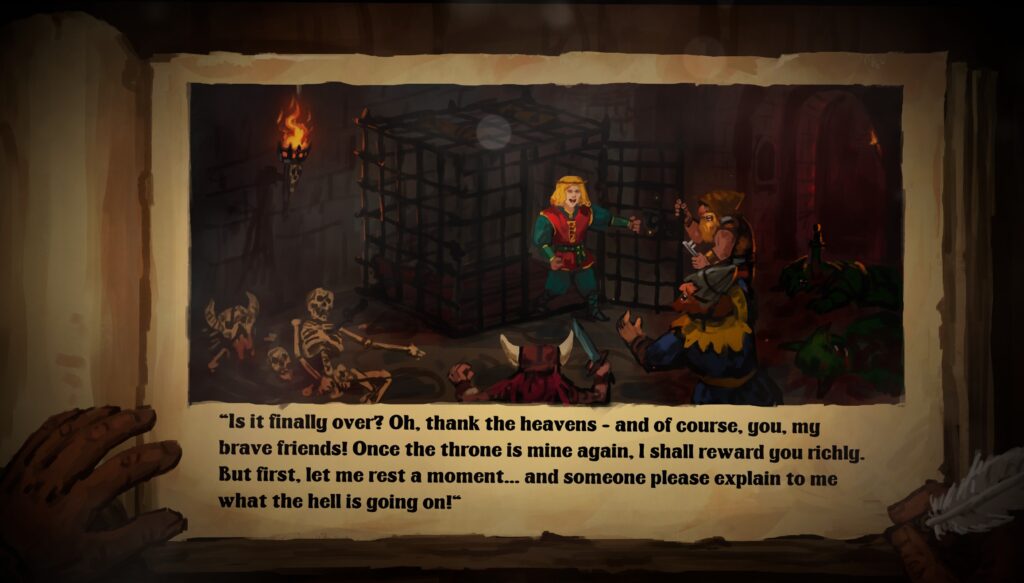
The Elder has called you to this remote camp in the middle of nowhere because a great evil is stirring, and he needs stout adventurers to stop it. You’ve all come for the promise of loot and danger. The barbarian, dwarf and wizard arrive first and are sent off immediately – the prince has been taken captive and there is no time to waste! While away doing that, the other adventurers arrive; archer, fire mage, knight, lancer and so on. But two are missing, and they will be found in the endless dungeons, if you can track them down.
Aside from the tutorial and first mission, you’ll have your pick from all the adventurers to choose your party of three for each mission. The game encourages you to mix up your team by giving adventurers who have just returned from a mission a debuff to their health, and adventurers who have not just gone on a mission, a bonus to their health, which can go up to a +3 bonus. When adventurer health ranges from 4 points to 8, this can be a substantial boost to their survivability.
Unlike the board game, dead adventurers are not gone forever; they cannot be used at all for a mission, but after that are ready to brave the deeps once more.
Adventurers start with no gear, no potions, and only their most basic ability unlocked. There’s loot in the dungeons, but most of it is guarded by monsters who are quite willing to die on your sword if they can chop more health from you – health that is not automatically healed. Deciding whether going for that loot is worth losing health when the boss fight is still ahead of you is a choice you have to make again and again.
(You should always go for the loot. At least in the early missions, even in a total party wipe, you get to keep the loot you found).
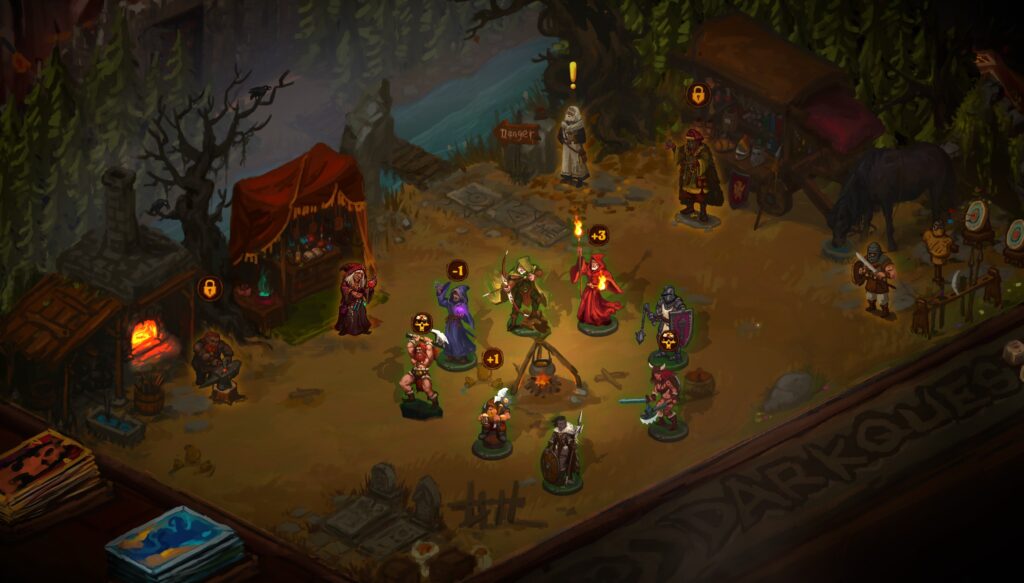
The camp is where you’ll spend that loot. The trainer sells you new ability cards, and these are unique to each adventurer. These will be your highest priority. The blacksmith crafts gear for gold – one of each kind of gear, so you’ll have to move gear around a bit. The alchemist makes one-use-per-mission potions that can prevent an early death or provide other useful effects. The merchant sells game changing items. He’s the last to unlock, and has the most expensive items. But they are the kinds of items you will build teams around.
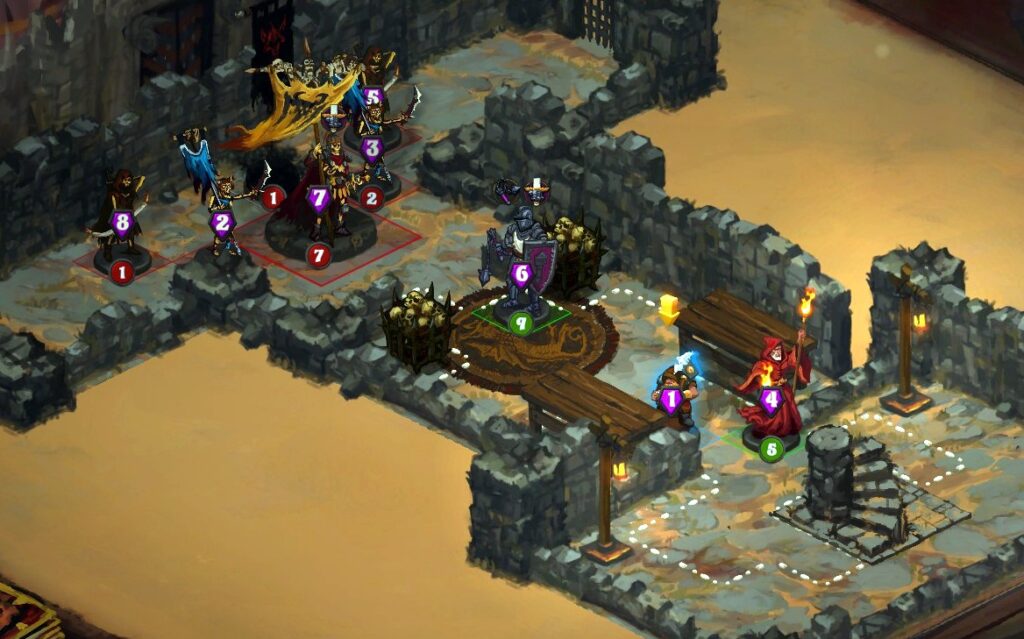
Like the board game, DQ4 is at its heart a tactical RPG. Each unit has its own movement, health, attacks, spells, and so on. When an enemy is on the board, initiative is rolled and adventurers and monsters move in that order. Since you always know when something is going to move, deciding when to move adventurers into danger or to move them behind a wall for safety becomes a big part of the game. Run into the room YOLOing it up? Cautiously lure the enemies out one at a time? Buff up a tank and have them stand in the door while doing ranged attacks with the others?
Since you’ll be typically using a different group of adventurers every mission, you’ll never be able to just stick with one pattern that just works. You’ll always be finding new strategies and combinations to try.
As in HeroQuest, the fights aren’t really that hard (at least, so far). DQ4 gives enough loot that you’ll soon have your best cards, decent gear, some potions and a few artifacts before you’ve gotten through a third of the game. After that, it’s just you vs the computer, trying to save your best cards for when you really need them.
And if you fail, well, just choose some different adventurers and head back in.
Word to the wise: Get those featherstep boots as soon as you can and stop worrying about traps forever.
Dark Quest 4 does more than just simulate a HeroQuest game. DQ4 takes that basic template, adds many more adventurers, amps up the danger with ample ranged attackers, and offers a vast number of “oh shit” moments to keep you on your toes. It’s a good buy, even if you’re not a HQ fan.