Peter Falk’s Grandpa character in the movie “The Princess Bride” tells his grandson about the book, “The Princess Bride”, describing it as “filled with fencing, fighting, torture, revenge, giants, monsters, chases, escapes, true love, and miracles”, in order to get the kid interested in the book.
The book itself, by William Goldman, is a story about hunting down the book “The Princess Bride” for his ungrateful son of whom he does not have custody. He remembers his dad reading it to him when he was little, but when he tracks down a copy, he realizes his dad skipped all the boring parts. Goldman is trying to get a new revised edition published, describing all the boring bits he’ll cut out of this edition, how he thinks his spoiled son will react, wondering if he can use the street cred he got from writing Marathon Man to get this book in front of people who can say yes, negotiations with the foreign author… It really feels more like a sideways autobiography of the author than a kid’s fantasy adventure. It’s worth reading – but the movie is its own thing. Peter Falk is telling the grandson that it’s worth working through the boring stuff to get to the good stuff.
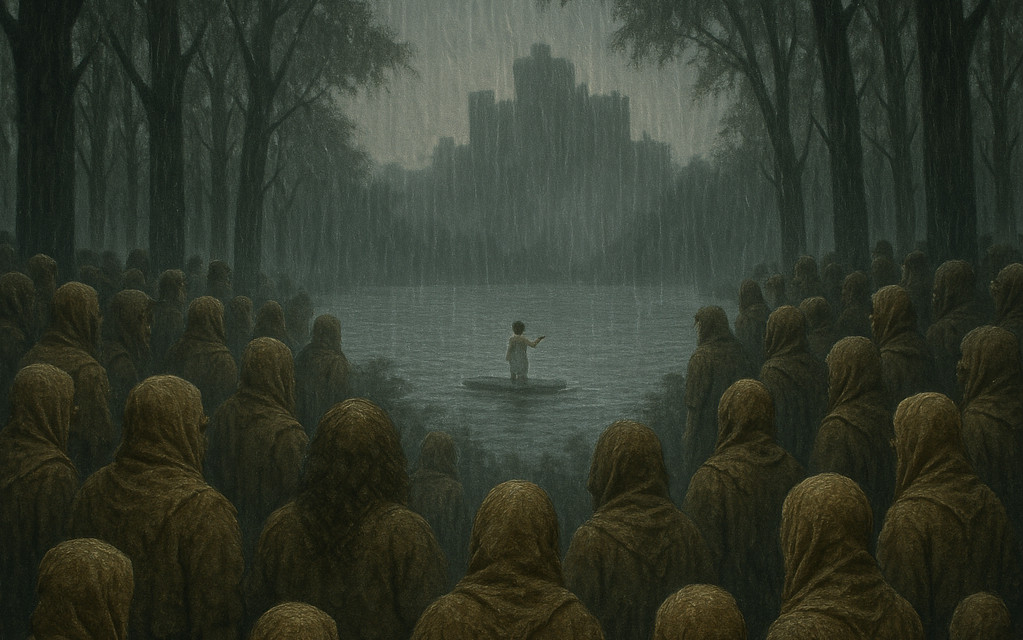
I needed Peter Falk to tell me this back when I bought the first book in the series (the first two books, Titus Groan and Gormenghast are one book split into two parts; the third is a separate story). I remember reading of the Mud People, the Hall of Bright Carvings, Mister Swelter’s kitchen, and the precocious kitchen boy who makes his escape, eventually to the roof of the giant castle Gormenghast where he spends a frigid night and day trying to find a way back into the castle and seeing many wonders on his way.
I didn’t read past that. That was a mistake.
It is the day of the birth of the 77th Earl of Gormenghast, Titus Groan, to his distracted father, Lord Sepulchrave, and his uncaring mother, the Lady Gertrude, who prefers the company of her cats and birds to people. They, their daughter Lady Fuchsia, her nurse Mrs. Slagg, their doctor Prunesquallor and his sister Irma, and Sepulchraves envious twin sisters, Cora and Clarice, inhabit the sprawling castle, more than a mile square, with their servants Flay, chief chef Swelter, ritual master Sourdust and his son Barquentiine, and innumerable other servants, including kitchen boy Steerpike, who plots and plans to someday rule Gormenghast for himself… no matter what he has to do to make that happen.
The castle is so isolated from the rest of the world that it might as well be on another planet. We are meant to believe this is set in the past, but as the series progresses, we find that’s not quite the case.
There are scenes that will stick with me – Steerpike’s journey among the many, many roofs and towers of the castle, including his cold night spent shivering in the field of stones, hundreds of feet above the ground, surrounded on all sides by windowless towers. Fuchsia’s attic. The Room of Roots and the enormous dead tree upon which Cora and Clarice sometimes lunch on one enormous branch. Lady Gertrude with her birds and cats. The Birthday Breakfast. The Burning. Sepulchrave’s descent into madness. The duel to the death between Flay and Swelter in the Hall of Spiders. Steerpike’s deadly ambition. Titus’ wet nurse, Keda, lives briefly in the castle but returns to her mud village only to find tragedy. Her meeting with the Brown Man, and her meeting with destiny. And the Earling, the ritual that closes the book, full of meaningless detail.
It’s possible to read the book and laugh at how ridiculous the people and situations are, or to read it as a story of people who are barely alive. Keda’s people, the Bright Carvers, spend their lives carving beautiful works of art that are either burned by the “Castles” or stored away in a museum nobody ever visits. Her people are beautiful until they reach their adulthood, at which point they suddenly look old and worn the rest of their lives.
Steerpike is either a terrible villain or a scalpel, allowing Gormenghast to heal by carving away the dead bits. The castle is an edifice or a metaphor for the meaningless rituals that rule our lives. The characters are in search of meaning or physical embodiments of their deepest natures.
Once you’ve met the characters and gotten over their silly names and distinctive personal mannerisms, you buy into their personal tragedies, brought into sharp relief toward the last third of the book when Peake takes you inside the minds of all the characters at the Birthday Breakfast, a meal nobody can eat as Master of Rituals Barquentine is marching up and down the table, as required at such an occasion, heedlessly stepping in all the food and plates with his stumpy leg and crutch.
It’s filled with fencing, fighting, torture, revenge, giants, monsters, chases, escapes, true love, and miracles, and you should read it. Skip the boring parts, but then go back and read them, too.