Steam says I spent a little over 36 hours in Symphony of War: The Nephilim Saga. The game had a lot to recommend it, and I enjoyed my time with it.
A tactical strategy lives or dies on its tactical combat. A great story or memorable characters are definitely important, but if the battles aren’t fun, there’s really no point to playing.
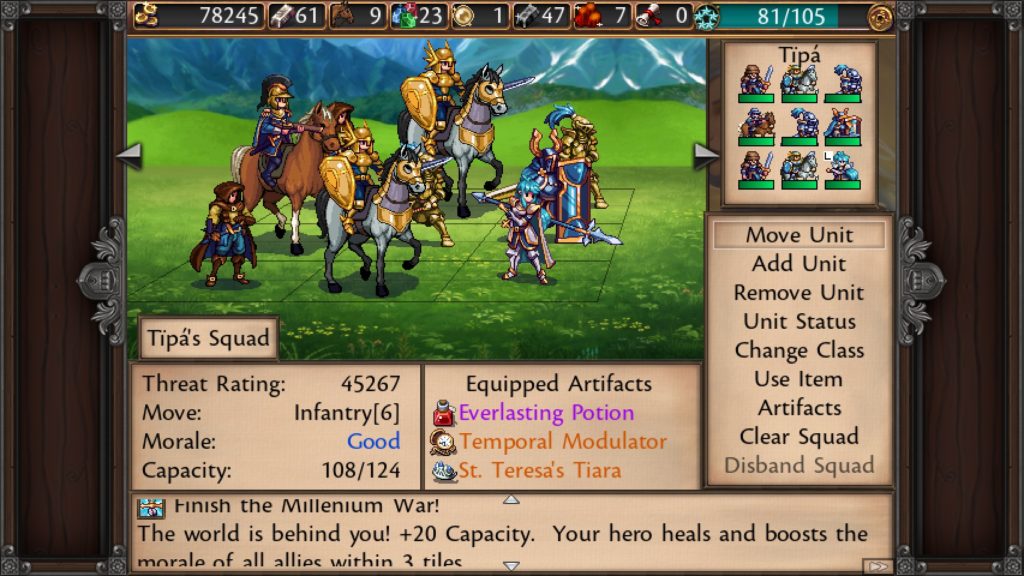
Symphony of War executes the battles extremely well. It gives tools and character upgrades at a pace good enough to not overwhelm, but also to allow you to shape your squads for their roles. My main character’s squad, and that of the paladin Diana’s, both were meant to tank. They would use the Nephilim power that taunts nearby enemy units and buffs their defense to take out enemy groups.
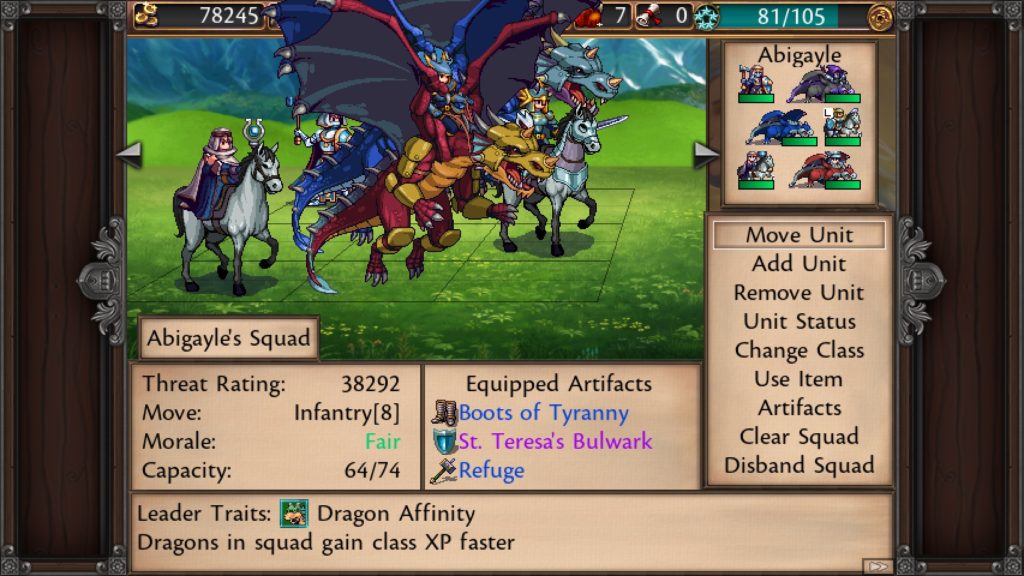
With that running, glass cannons like Beatrix’s mage squad or Abigayle’s dragon squad could clear out the outliers. Ranged squads were meant for fortified locations, and cavalry squads grabbed distant objectives. There’s also Artifacts that can have a dramatic effect – for instance, my main squad has equipped artifacts that allow it to have first turn even on the defense, sacrifice all its magic power to enhance its melee power, and get healed whenever it defeats a unit, at the cost of losing 10% of its health each phase.
I had to switch that one out in times when the main squad wasn’t doing a lot of killing.
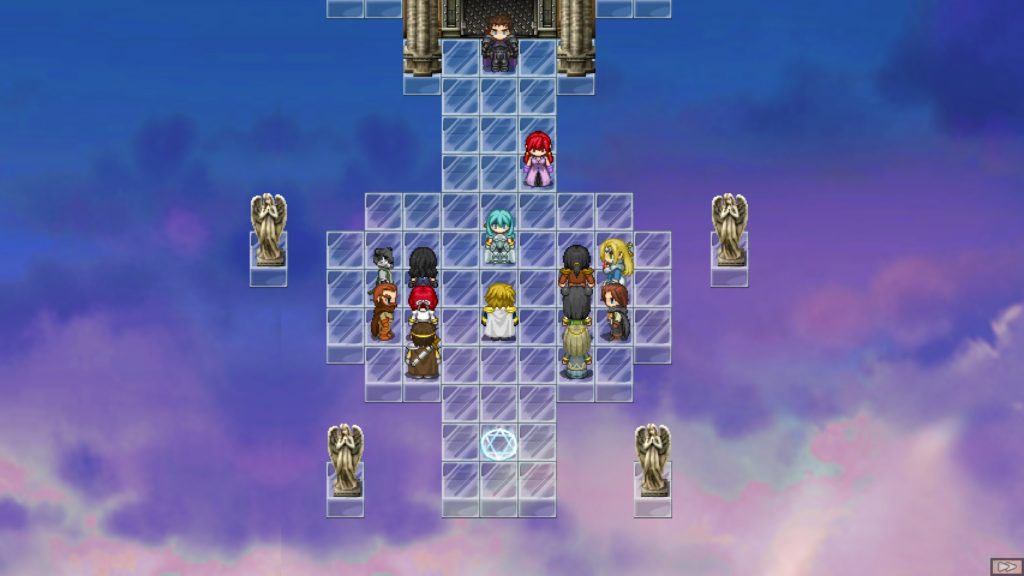
Challenge objectives entice the user to try different strategies to get better rewards. Toward the end, one battle suggested forcing every enemy squad to surrender instead of destroying it entirely. This requires attacking morale. Squads are usually demoralized by their comrades dying around them, but there’s also artifacts that help, and confronting low morale units with high morale units can force a surrender.
There’s a few other situations which, avoiding spoilers, I don’t want to get into.
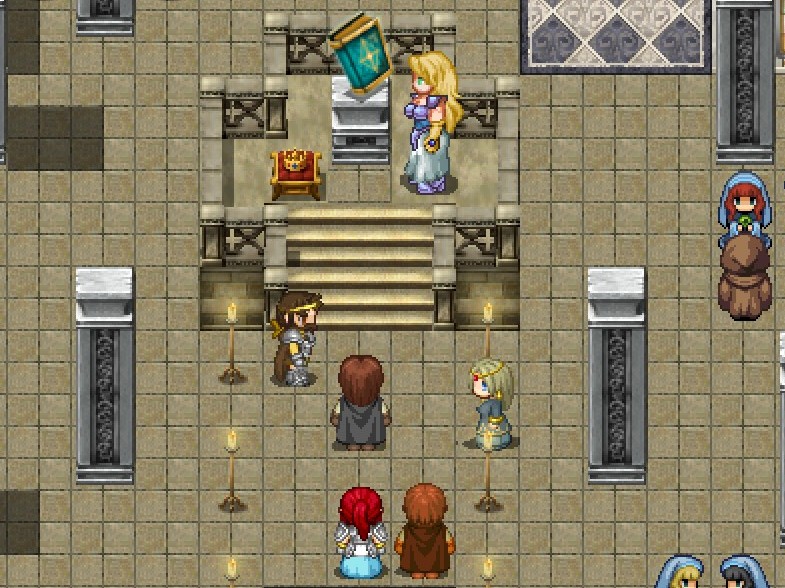
The characters were written mostly consistently, but sometimes they’d break the fourth wall a little bit as they would acknowledge the things we as the player would know from playing games of this sort, but the characters might not. And there were a few typos – I imagine a patch will fix those soon.
The plot itself mostly stayed true to expectations. The heroes gathered, the ultimate evil was confronted and destroyed. The hero faced defeat, and worse, came back changed – but the story never gave the hero a resolution, although one could be implied from the epilogue.
The game is fairly linear. I only saw one branching point for the plot, and it came at the very end. I might go back, load up the save, and try the other decision. Maybe it would have a more satisfying ending.
Other games of this sort might have several bosses – Symphony of War just had the one. Its new mechanics showed the possibilities the game might have displayed all the way through, but most battles, and most enemies, were cookie cutter. The game’s AI isn’t that great either, and it is fairly easy to intercept and prevent the enemy from taking back any of its gains.
The vast majority of the game’s chapters promise instant loss if the enemy should ever take the ally starting position, usually a fort. The enemies never showed the slightest inclination to do so, allowing me to leave the starting fort entirely undefended without worry. The game also suggested that the enemy would battle for control of the healing temple common to most maps, but that was never actually the case – they never retook or even attacked any building I had seized. They focused purely on the weakest unit within range. This allowed me to use weak units as bait to force the enemy away from the places I intended to go, to great effect.
The five Nephelim powers that granted teleportation, taunting, extra moves, AE damage and AE morale damage, were a little overpowered. They powered up quickly and multiplied the damage I could bring to bear.
I played on the Captain difficulty – the normal difficulty. I didn’t have any real problems in the game; I only had to restart a battle once to change artifacts. The easier Story difficulty would probably remove all challenge from the game (as it is intended to, I guess). The Warlord difficulty might punch things up a bit, but aside from grabbing the trophy, I don’t see any real reason to replay the game.
Unlike Final Fantasy Tactics, where the heroes you chose would drastically influence the game, there’s not too many ways to build a squad in Symphony of War, and with the end game allowing you to field up to twenty squads, every battle is just throwing everything you have at the enemy without any real nuance to the squad composition.
Videos
Here’s a video of the final fight and the epilogue. Obviously, it is full of spoilers.
Here’s a video of a really bad day in the life of the protagonist: