We reach the end of the Internet Protocol Intellectual Property-based MMO list with the biggest MMO ever… and the one that promised to dethrone it.
If you’ve missed the previous entries, here they are:
Part 1 - Absolute Terror, Age of Conan, Champions Online, DC Universe Online, Toontown
Part 2 - Dragon Oath, Dungeons & Dragons Online, Final Fantasy XI & Final Fantasy XIV, FusionFall, Hello Kitty Online
Part 3 - Huxley, LEGO Universe, Lord of the Rings Online, Pirates of the Caribbean Online, Playboy Manager
Part 4 - Star Trek Online, Star Wars Galaxies, Star Wars: The Old Republic, Stargate World, Ultima Online
Game: Warhammer Online
IP: Games Workshop’s Warhammer
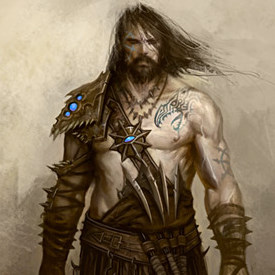
Even as pen-and-paper games typified by such roleplaying games as D&D, Champions and Traveler (a seminal space RPG) took the tabletop gaming arena by storm, other games focused more heavily on D&D’s wargaming roots. Tractics and Starfleet Battles simulated vehicle combat, but it was 1983’s Warhammer Fantasy Battles that would set the new standard for tabletop fantasy gaming.
With 15 playable races, a grand epic battle where your closest ally could be your deadliest enemy, and a world shaped by gods and torn by war, Warhammer was the complete package. Kids and adults the world over would spend hundreds of hours carefully painting miniatures in intricate detail and cart their entire collection to gaming conventions to compare and battle them. Warhammer’s popularity was only eclipsed by its own follow-up, 1988’s Warhammer 40000, which took the franchise into the far future.
Such a popular game would have no trouble competing against Blizzard’s World of Warcraft in the MMO genre. Warhammer Online’s motto was “war everywhere”. Innovations such as their public quest system were instantly copied for other games. Their “Tome of Knowledge” automatically collected information about everything a player had done or discovered in the game. Everything a player did would advance the war for their faction, until they could eventually wrestle for control of the enemy’s capital city against its most fearsome defenders. Developers Mythic, leaders in faction-based PvP MMOs with their groundbreaking Dark Age of Camelot, were the only company with enough experience to pull this off.
With everything going for it, it’s not easy to see why it didn’t do better. Certainly, launching against WoW’s Wrath of the Lich King expansion didn’t do them any favors. With only two factions vs DAoC’s innovative three faction system, battles tended to be uneven. A game mechanic which favored roving warbands explicitly avoiding each other, and gameplay that put a premium on leveling in instanced “scenarios” as opposed to joining in the open world PvP, as well as an early requirement to repeat high-end PvE content in order to gain the armor needed to do the final PvP instances, all perhaps contributed to its rapid fall. Or perhaps it was just an unrealistic expectation of the popularity of a PvP-based game, a genre that has always been second to PvE gameplay in Western MMOs.
Warhammer Online now has an “endless free trial”, that allows you to level through the complete first tier of the game.
Game: World of Warcraft
IP: Warcraft

In 1994, the Real-Time Strategy (RTS) genre was still seeking to define itself after the success of 1992’s “Dune II” jump-started the genre. To Dune II’s basic formula of harvest/build/destroy, Warcraft added the essential multiplayer modes and a wide variety of mission types. Through Warcraft and its successors, Warcraft II & III, Blizzard developed a massive storyline running through the series about interdimensional Orcs who discover and enlarge a portal to the Human world of Azeroth, and are then driven and exiled on Azeroth by the demonic Burning Legion. The orcs and humans must (briefly) ally in order to defeat the Legion.
In the uneasy detente that follows comes 2004’s World of Warcraft, that took the plot, setting and races and made an MMO from it. Blizzard, doing as it did with the RTS, took the best ideas from existing games in the MMO genre (largely EverQuest and Mythic’s Dark Age of Camelot), ramped down the difficulty and ramped up the charm, and made a game that quickly rose to, and remains, the number one MMORPG in the world.
Game: Ys Online
IP: Ys
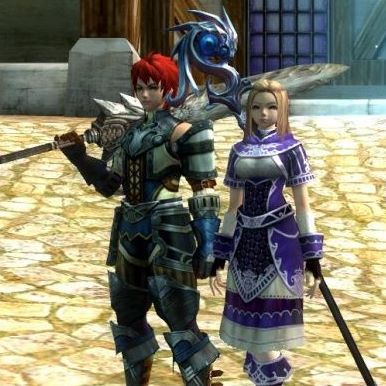
Few Japanese RPG series have really stood the test of time. There’s Square-Enix’s Final Fantasy series, Square-Enix’s Dragon Quest series, and Falcom’s “Ys” series. Produced for a wide variety of consoles and personal computers, Ys (unrelated to the mythical city of Ys aside from its name) tells a connected story over the series of games about Adol Christin. Adol explores the world in adventures that have spawned several RPGs, an RTS, and an anime. The first two games in the series have been recently ported to the Wii and the Nintendo DS.
Ys Online takes the setting of the Ys series and moves it hundreds of years into the future, well past the time of Adol Christen. Players can choose from three races – the European-like Eresians, the powerful Afrocans warrior race, or the effete, cultured, in tune with nature and technology, Japanese-like Kimoans. This game, which cannot be played in the US, is either still in beta or has been cancelled. I can’t find any information about this game more recent than a year ago….
Based on the MMOs in this list and others that seemed intriguing but didn’t fit the theme, I may start playing some of them on my own, just to see if the gameplay lives up to the hype. In particular, I’d like to give Dragon Oath a shot. If I do, you’ll be reading about it here.